
Modular Gas Plants and Gas Processing Equipment
QB Johnson designs and fabricates custom modular gas plants and natural gas processing equipment for applications that require gas treating, conditioning, dehydration, separation, hydrocarbon liquid recovery, BTU control, hydrocarbon dew point control, and integrated process equipment packages.
Each gas plant is engineered around the project, including gas composition, flow rate, inlet pressure, temperature, liquid recovery goals, sales gas requirements, site conditions, transportation limits, code requirements, and customer specifications. QB Johnson builds skid-mounted and multi-module gas processing equipment in Oklahoma City for production, midstream, processing, and remote applications.

ASME Sec. VIII, Div. 1 vessels

Repairs and alterations

Capacity
Sized to the project
Components
Modules with in-house vessels and exchangers
Design
Single or Multi-Module Packages
Testing
In-house hydrotest to 15,000 psig
Processing Goals
Liquid recovery and BTU control
Refrigeration
Mechanical, J-T, or mixed refrigerant
Why Modular Gas Plants Matter
Natural gas often requires more than one conditioning step before it can meet sales, pipeline, plant, or downstream process requirements. Depending on the stream, the process may need to remove acid gas, water vapor, free liquids, fine contaminants, heavy hydrocarbons, or recoverable natural gas liquids.
A modular gas plant brings those process steps together into a coordinated equipment package. Instead of treating each vessel or module as an isolated piece of equipment, the plant is designed around the gas stream, performance goals, site constraints, transportation limits, and integration requirements.
For operators, producers, EPC teams, and project engineers, modular fabrication can reduce field complexity, improve shop-level quality control, simplify coordination between process sections, and support a more organized installation and startup process.
Custom Gas Processing Plant Fabrication
QB Johnson gas plants are custom-engineered for the application. The design starts with the gas analysis, flow rate, pressure, temperature, liquid content, CO2 and H2S levels, water content, hydrocarbon dew point requirements, NGL recovery goals, sales gas requirements, site conditions, and customer specifications.
A modular gas plant may include:
- Inlet separation
- Filter separators or scrubbers
- Amine treating units
- TEG dehydration units
- Molecular sieve dehydration units
- Indirect line heaters
- Heat exchangers
- Mechanical refrigeration systems
- J-T refrigeration or expansion-based cooling
- Mixed refrigerant systems
- Stabilization equipment
- Thermal oxidizers or emissions-related equipment where required
- Structural modules, piping, valves, instrumentation, controls, insulation, and coating
QB Johnson's in-house engineering and fabrication approach helps coordinate pressure vessels, piping, structural modules, instrumentation, controls, QA/QC, documentation, painting, and final assembly around one process objective.
What a Gas Plant Does
Gas plants, sometimes referred to as gas liquid recovery units in certain applications, are used to recover marketable hydrocarbon liquids from gas streams and control sales gas BTU content. They can also help reduce condensation and two-phase flow in transmission pipelines while supporting a more consistent heating value for fuel gas, compression, combustion turbines, or downstream users.
In a simple liquid recovery process, gas is cooled so heavier hydrocarbons condense and separate from the vapor phase. Heat exchangers may cross exchange separated gas with inlet gas for initial cooling. External refrigeration, J-T refrigeration, or mixed refrigerant systems may then reduce the gas temperature further depending on the required recovery or hydrocarbon dew point target.
Separated liquids may be routed to stabilization equipment where temperature and pressure are controlled to produce a transportable product with the required vapor pressure. The final process arrangement depends on gas composition, desired liquids recovery, product specifications, and downstream requirements.
Refrigeration and Liquid Recovery Options
Gas processing plants can use different cooling approaches depending on the required outlet condition and project economics. Mechanical refrigeration is commonly used where the gas needs controlled cooling to condense hydrocarbons and reduce hydrocarbon dew point. J-T refrigeration uses pressure reduction and expansion cooling to lower gas temperature. Mixed refrigerant systems can be considered where deeper cooling or a specific process arrangement is required.
The right approach depends on inlet composition, pressure, temperature, desired recovery, available utilities, compression requirements, site conditions, and operating flexibility. QB Johnson can fabricate equipment around the selected process approach, including related heat exchangers, separators, piping, controls, and supporting vessels.
In some projects, gas plant equipment works alongside molecular sieve dehydration upstream of cryogenic processing or NGL extraction. In other projects, TEG dehydration, amine treating, heaters, or filter separators may provide the required conditioning before the gas reaches the recovery or refrigeration section.
Modular and Skid-Mounted Design
Modular gas plants are built as one or more skid-mounted or modular equipment packages. This approach allows more of the fabrication, fit-up, piping, instrumentation, coating, and inspection work to happen in the shop before the equipment moves to the field.
Modular design can be especially useful when field labor is limited, site access is difficult, installation windows are short, or the project needs multiple process systems coordinated into one package. Transportation dimensions, lifting requirements, foundation loads, module interfaces, utility tie-ins, and maintenance access should all be considered during design.
QB Johnson can design gas plant equipment as compact single modules, larger process modules, or multi-module packages depending on the process scope and transportation requirements. The goal is not just a clean shop build; it is a plant layout that can be installed, operated, and maintained practically after delivery.
Integrated Process Equipment
A gas plant may combine several QB Johnson product lines into one process system. This is where the equipment has to work together, not just sit near each other on separate skids.
Examples include:
- Filter separators upstream of treating or dehydration equipment
- Amine units for H2S and CO2 removal
- TEG dehydration units for standard water vapor removal
- Molecular sieve dehydration units for deep dehydration before cryogenic or NGL recovery service
- Separators and scrubbers for bulk liquid removal
- Heat exchangers and refrigeration systems for cooling and liquid recovery
- Indirect line heaters for temperature control or pressure reduction support
- Thermal oxidizers for emissions-related process requirements
When these systems are designed together, QB Johnson can better coordinate process conditions, equipment layout, piping connections, instrumentation, maintenance access, and documentation.
Applications for Modular Gas Plants
QB Johnson gas processing equipment supports domestic and international applications where gas must be treated, conditioned, cooled, dehydrated, separated, or processed before sales, transport, or downstream use.
Common applications include:
- Central processing facilities
- Midstream gathering systems
- Natural gas liquid recovery
- Hydrocarbon dew point control
- Fuel gas conditioning
- Compression station support
- Cryogenic plant pretreatment
- NGL extraction support
- Sales gas BTU control
- Remote or space-constrained installations
- Stabilization and liquid handling support
Each application should be evaluated around actual gas composition and project requirements. A gas plant for liquid recovery will not have the same process needs as a plant focused on sweetening, dehydration, or fuel gas conditioning.
Built for Project-Specific Processing Requirements
QB Johnson has manufactured gas conditioning and natural gas processing equipment since 1962. The company brings in-house engineering, ASME-code fabrication capabilities, ISO 9001:2015 certified quality processes, experienced trades, documentation, startup support, and spare parts support to custom modular gas plant projects.
Because gas plants can involve several process systems, coordination matters. QB Johnson's manufacturing experience helps align vessels, structural modules, piping, heat exchangers, instrumentation, controls, coatings, and support equipment around the process requirements and field conditions the equipment will face after delivery.
For customers across the United States and international markets, QB Johnson can fabricate modular gas processing equipment around the application rather than forcing a standard package into a complex process.
Gas Plant Project Snapshots
Two gas conditioning projects built in Oklahoma City.
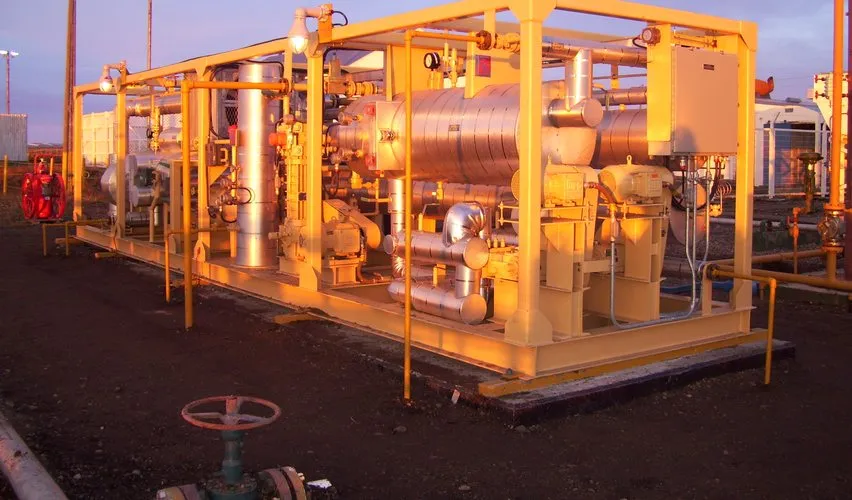
Modular Gas Plant
5 MMSCFD Hydrocarbon Dew Point Control Unit
- Capacity
- 5 MMSCFD
- Service
- Hydrocarbon dew point control
- Region
- South America
Modular dew point control plant, built in Oklahoma City and shipped to South America.

Molecular Sieve
14 MMSCFD Molecular Sieve and Gas Conditioning Unit
- Capacity
- 14 MMSCFD
- Service
- Gas conditioning
Molecular sieve dehydration with gas conditioning equipment, built for a midstream operator.
Related Equipment
Modular gas plants often include or work alongside other gas conditioning and processing equipment. Explore related QB Johnson equipment for treating, dehydration, separation, heating, and emissions support.