
Natural Gas Indirect Line Heaters
QB Johnson designs and fabricates custom natural gas indirect line heaters for applications that require controlled gas heating, hydrate prevention, pressure reduction support, fuel gas conditioning, and process temperature control. Indirect fired heaters transfer heat through a bath media and process coil, keeping the flame separated from the natural gas stream while raising the gas temperature for downstream operation.
Each heater is engineered around the application, including gas composition, flow rate, pressure, inlet temperature, required outlet temperature, pressure reduction conditions, heat duty, site requirements, fuel system needs, code requirements, and customer specifications. QB Johnson builds indirect fired water bath and salt bath heaters in Oklahoma City for production, midstream, pipeline, gas processing, city gate, and pressure reduction applications.

ASME Sec. VIII, Div. 1 vessels

Repairs and alterations

Designs
Water bath or salt bath
Burners
Natural or Forced Draft
Capacity
Custom MMBTU/hr duty
Purpose
Hydrate Prevention
Coils
ASME process coils
Service
Pressure reduction support
Why Indirect Line Heaters Matter
Natural gas temperature can drop sharply when pressure is reduced across a regulator, control valve, choke, or other restriction. That temperature drop can allow hydrates to form when water is present in the gas stream. Hydrates can restrict flow, plug equipment, damage valves, interrupt service, and create operating issues in production, pipeline, and processing systems.
Indirect line heaters are used to raise or maintain gas temperature before pressure reduction or other process steps where hydrate formation, freezing, or low-temperature operation could become a problem. They are also used where controlled heat is needed for fuel gas, station heating, process support, or gas conditioning.
For many projects, the heater is not just a utility item. It protects downstream equipment, supports stable operation, and helps keep the process within the required temperature range.
Custom Indirect Fired Heater Equipment
QB Johnson indirect line heaters are built around the project instead of selected only from a standard catalog. The required heater size and configuration depend on gas flow, operating pressure, pressure drop, inlet temperature, desired outlet temperature, heat duty, bath media, fuel gas conditions, site layout, controls, environmental conditions, and applicable codes.
A typical indirect fired heater may include:
- Heater shell
- Firetube
- High-pressure process gas coil
- Expansion tank
- Exhaust stack
- Burner and fuel train
- Burner management and controls
- Temperature controllers
- Low bath level shutdown
- Flame arrestor or shutdown features where specified
- Fuel gas preheat coil
- Insulation with aluminum jacketing
- Structural modules, skids, platforms, ladders, piping, and instrumentation where required
QB Johnson supports in-house engineering, ASME-code fabrication, API 12K heater construction where applicable, QA/QC, documentation, painting, insulation coordination, startup support, and spare parts support.
How Indirect Line Heaters Work
An indirect fired heater uses combustion heat without placing the flame in direct contact with the process gas. The burner fires into a firetube inside the heater shell. Heat from the firetube warms the bath media, commonly a water and ethylene glycol solution in water bath service or another bath media where the application requires it.
The natural gas flows through a high-pressure process coil submerged in the heated bath. Heat transfers from the bath media through the coil wall and into the gas as it passes through the coil. Because the flame is separated from the process coil by the bath, the arrangement provides controlled indirect heating for natural gas and related process streams.
The burner firing rate is controlled based on temperature feedback, typically from the outlet gas temperature, bath temperature, or both. Control systems may be pneumatic or electronic depending on project requirements. Natural draft burners may be appropriate for some applications, while forced draft burners can be selected where higher efficiency, control, or project specifications require them.
Applications for Natural Gas Line Heaters
Natural gas indirect line heaters are used where temperature control is needed before or during processing, pressure reduction, or delivery. QB Johnson designs heaters for production, midstream, transmission, fuel gas, gas plant, and station applications.
Common applications include:
- Pressure reduction stations
- City gate stations
- Gas production facilities
- Dehydration facilities
- Combustion turbine fuel gas support
- Pipeline and station heating
- Fuel gas conditioning
- Process gas heating upstream of equipment
- Hydrate prevention during pressure drop
- Natural gas processing and conditioning systems
Heaters may also work alongside TEG dehydration units, filter separators, separators, gas plants, heat exchangers, and related gas conditioning equipment depending on the process.
Hydrate Prevention and Pressure Reduction
Hydrate prevention is one of the most common reasons to use an indirect line heater. When natural gas pressure is reduced, the Joule-Thomson effect can lower the gas temperature enough for hydrates to form if water is present. Even when the gas has been treated or dehydrated, operating conditions may still require heat to maintain temperature through pressure reduction or station operation.
The heater must be sized for the actual process conditions. Flow rate, pressure drop, gas composition, inlet temperature, target outlet temperature, ambient conditions, bath temperature, and available fuel all affect the heat duty. Undersizing can leave the gas too cold. Oversizing can add unnecessary cost and operating complexity.
QB Johnson can review the operating conditions and fabricate a heater package that fits the required duty, controls, codes, and site layout.
Standard and Optional Heater Features
Indirect line heater requirements vary by project, but common QB Johnson heater features may include high thermal efficiency design, stainless steel instrument tubing, expansion section, ASME-code construction, API 12K construction, fuel gas preheat coil, temperature controller, insulation with embossed aluminum jacketing, high temperature shutdown, regulators, flame arrestor, and stack downdraft diverter.
Optional features may include:
- Electronic pilot igniter or reigniter
- Flame failure shutdown
- High stack temperature shutdown
- Low bath level shutdown
- Forced draft burners
- Electronic PLC control panel
- ASME-code fuel gas scrubber
- Structural module or skid mounting
- Ladder and platform
- Turbulators
The final scope should match the site requirements, customer standards, control philosophy, service conditions, and maintenance expectations.
Line Heater vs. Dehydration
Line heaters and dehydration units solve different problems, even though both can be part of a hydrate prevention strategy. A TEG dehydration unit removes water vapor from the gas stream to reduce hydrate and corrosion risk. An indirect line heater raises gas temperature so the stream can move through pressure reduction or process conditions without dropping into a hydrate-forming range.
Some applications need one or the other. Some need both. A production or station application may use a filter separator to remove liquids, a TEG dehydration unit to remove water vapor, and an indirect line heater to maintain temperature through pressure reduction or downstream operation.
If the right equipment combination is not clear, QB Johnson can review the process requirements and discuss whether heating, dehydration, separation, or a combined equipment approach is the better fit.
Built for Project-Specific Heating Requirements
QB Johnson has manufactured natural gas conditioning and processing equipment since 1962. Indirect line heaters are part of that broader equipment experience, supporting production, midstream, gas plant, station, and pressure reduction applications.
Each heater is supported by in-house engineering, ASME-code fabrication capabilities, ISO 9001:2015 certified quality processes, experienced trades, documentation, startup support, and spare parts support. QB Johnson builds equipment for customers across the United States and international markets from its Oklahoma City manufacturing facility.
For projects where temperature, pressure, fuel, code, or site conditions create specific requirements, QB Johnson can design and fabricate an indirect line heater around the application.
Line Heater Project Snapshot
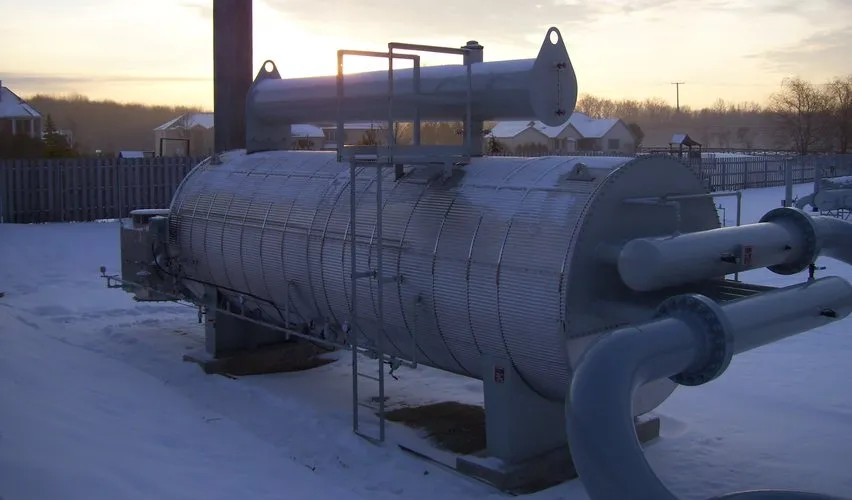
Indirect Line Heater
3.5 MMBTU/hr Indirect Line Heater
- Capacity
- 3.5 MMBTU/hr
- Service
- Gas utility
- Region
- Ohio
Indirect-fired line heater built for a gas utility in Ohio.
Related Equipment
Indirect line heaters often work alongside other gas conditioning and processing equipment. Explore related QB Johnson equipment for dehydration, separation, heat transfer, treating, and complete process packages.